

Golf GTi
The Mick Jagger of cars

Did you know the VW Golf turned 52 this May? That’s proper pensioner territory (for a car) – it qualifies for a free bus pass and a TV licence. Yet the Mk.1 still looks like it just strutted out of an ’80s disco, minus the flares and the Bolivian marching powder. Mick Jagger wishes he’d aged this well. Keith Richards, on the other hand, looks like the Mk.1’s undertaker.
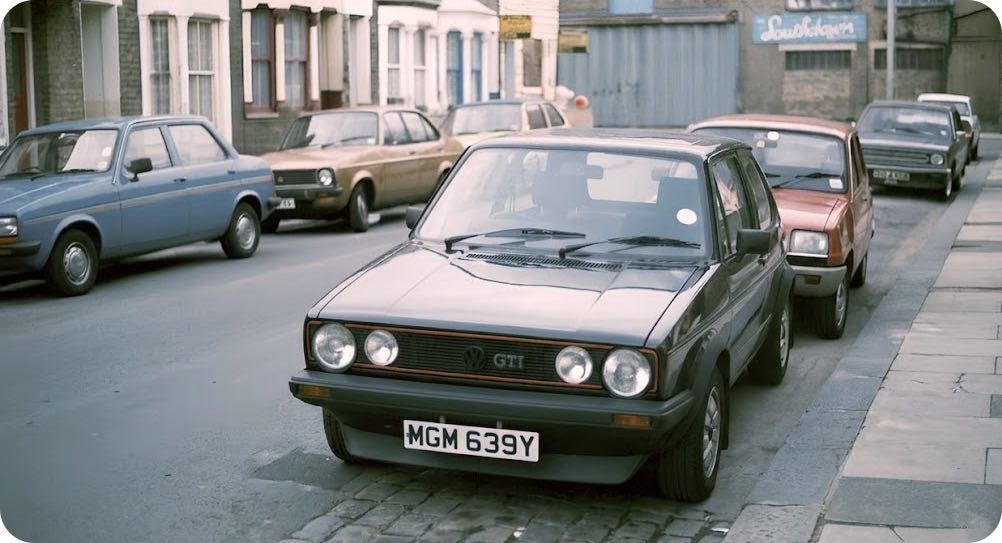
Parked next to mine above were the usual suspects: a Renault 5, a Hillman Hunter - wheezing like my Uncle Reg after a Sunday roast, a Triumph of some description (or possibly a pile of rust with windows), a Morris Ital - the car that made the Marina look like a Ferrari, and an Escort that handled like a shopping trolley. The Golf? It looked like it had just time-travelled from 2026. Or maybe I’m biased?

About 7 million Mk.1 Golfs were produced between ‘74 and ‘83, making it the best-selling of the eight generations (37 million in total - and counting). It was even brought back into production between ‘84 and ‘09 in South Africa as the Citi Golf – a car so tough it outlived apartheid, multiple economic crises, and still turned up to parties looking mint.

By the early ‘70s, VW was in the kind of trouble that made British Leyland look successful. The Beetle, bless its air-cooled heart, was propping the company up like a 90-year-old butler who refuses to retire. One more bad quarter, and Volkswagen would’ve been reduced to selling sausage rolls at motorway service stations.

The Mk.1 Golf didn’t just replace the Beetle - it dragged Volkswagen kicking and screaming into the modern era and then invented a whole new type of fun car that every manufacturer from Peugeot to Ford had to copy. It’s practical enough to carry your shopping, naughty enough to embarrass a Porsche at the lights, and handsome enough that even after half a century it still turns heads.

The GTi edition wasn’t some boardroom brainwave. It was cooked up by a bunch of VW engineers as an after-work skunkworks project. They nicked bits from the parts bin - bored-out engine from the Audi 80, fuel injection, lowered suspension, plaid seats - and created a monster. Management initially thought it was a bit of a laugh. Then it turned up at the 1975 Frankfurt Motor Show and the world lost its mind. Hot hatches were born, and the rest of the industry spent the next decade playing
catch-up in brown trousers.
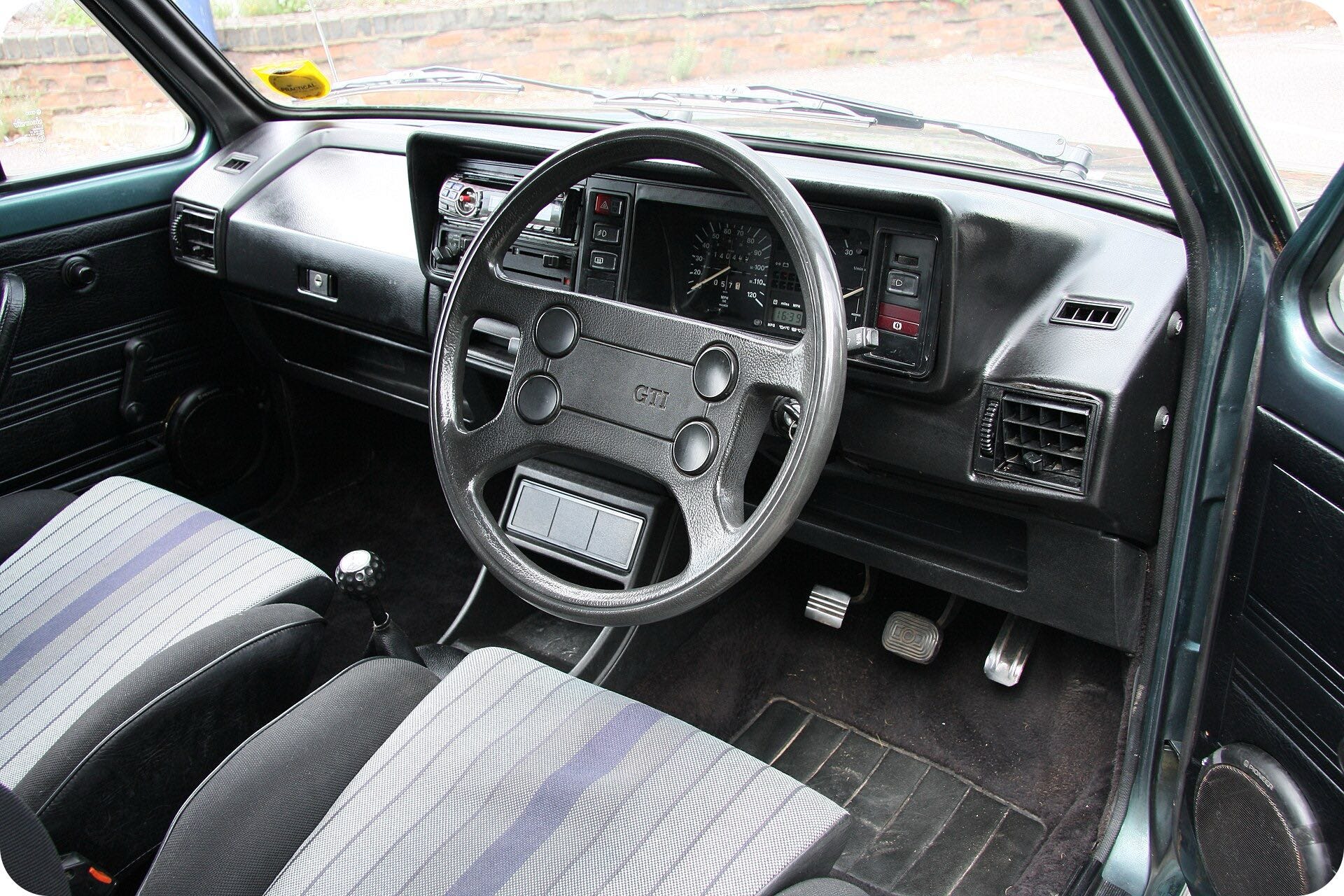
That tartan interior was designed by a woman named Grunhild Liljequist, who’d been on holiday in Scotland. The golf-ball gear knob was her idea too. Proper genius - every time you change gear you’re reminded you’re driving something fun, not an appliance.
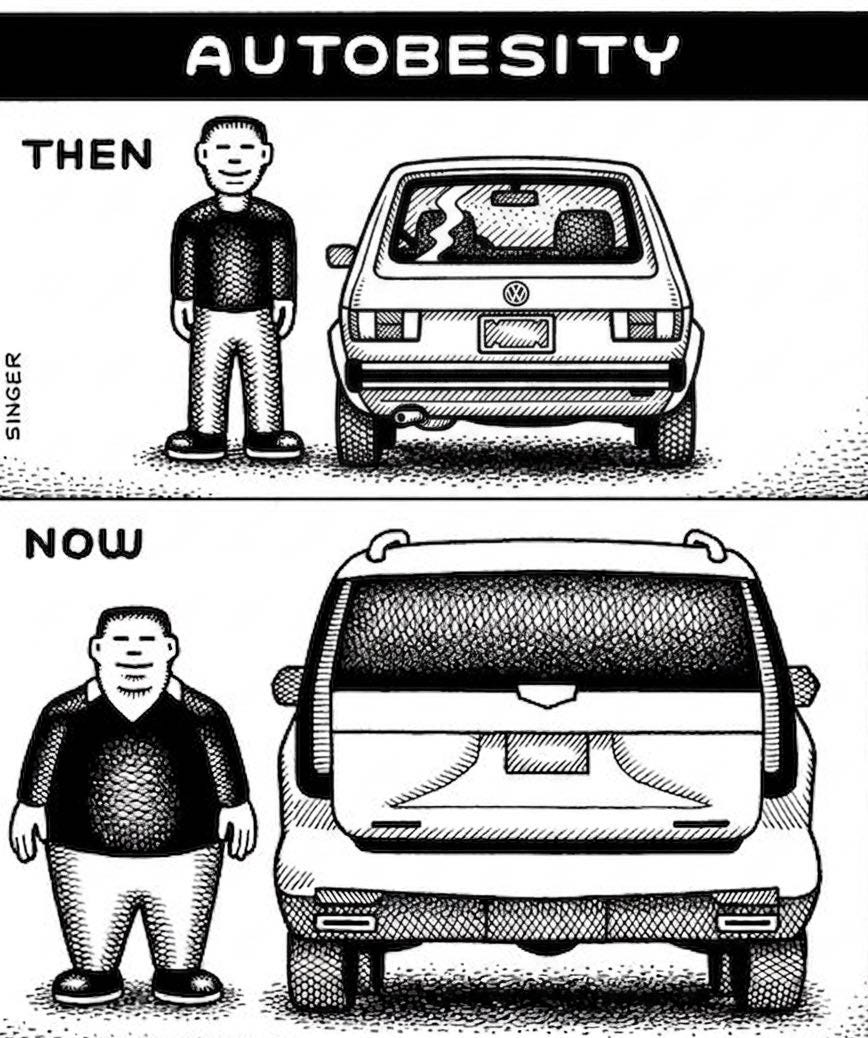
Early GTIs had just 110hp, but weighed 810kg - that’s about the same as a packet of crisps compared to today’s electric behemoths, which tip the scales at over two tons and have the agility of a wheelie bin full of bricks. And it’s not just the batteries that make today’s fatties as nimble as a washing machine; the Mk1. had 200m of wiring, the Mk.8 has nearly 2,000m! You’d need the courage of a lion tamer and the reactions of a caffeinated squirrel to exploit even a fraction of a modern 2+ ton EV’s performance. But you could throw a Mk.1 GTi around like a frisbee and it would stick to the road. It was witchcraft.
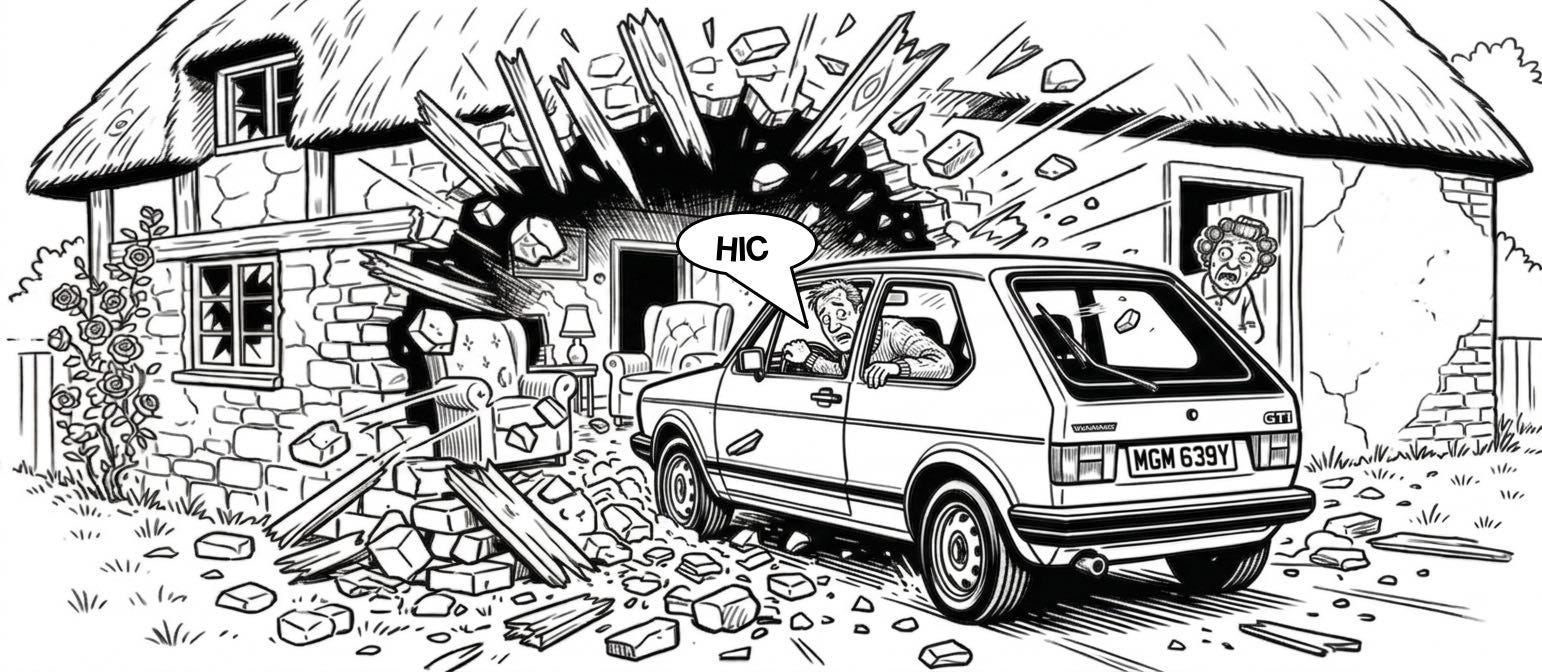
Mind you, my own Mk.1 GTi didn’t exactly retire gracefully. After a completely sober Christmas party (officer), I was admiring a gift on the passenger seat when I looked up to discover myself burrowing a new entrance into a 400-year-old cottage in Cookham. The owner, thankfully, was in the bath. The car? Not so lucky. If cars could talk, the Mk.1 would be the one at the bar, nursing a whisky, muttering, “I’ve seen things, son. And most of them weren’t my fault!”

Thank you again Allister Love to you both Hope all goes well I am missing Hanna away in Poland until mid July !!